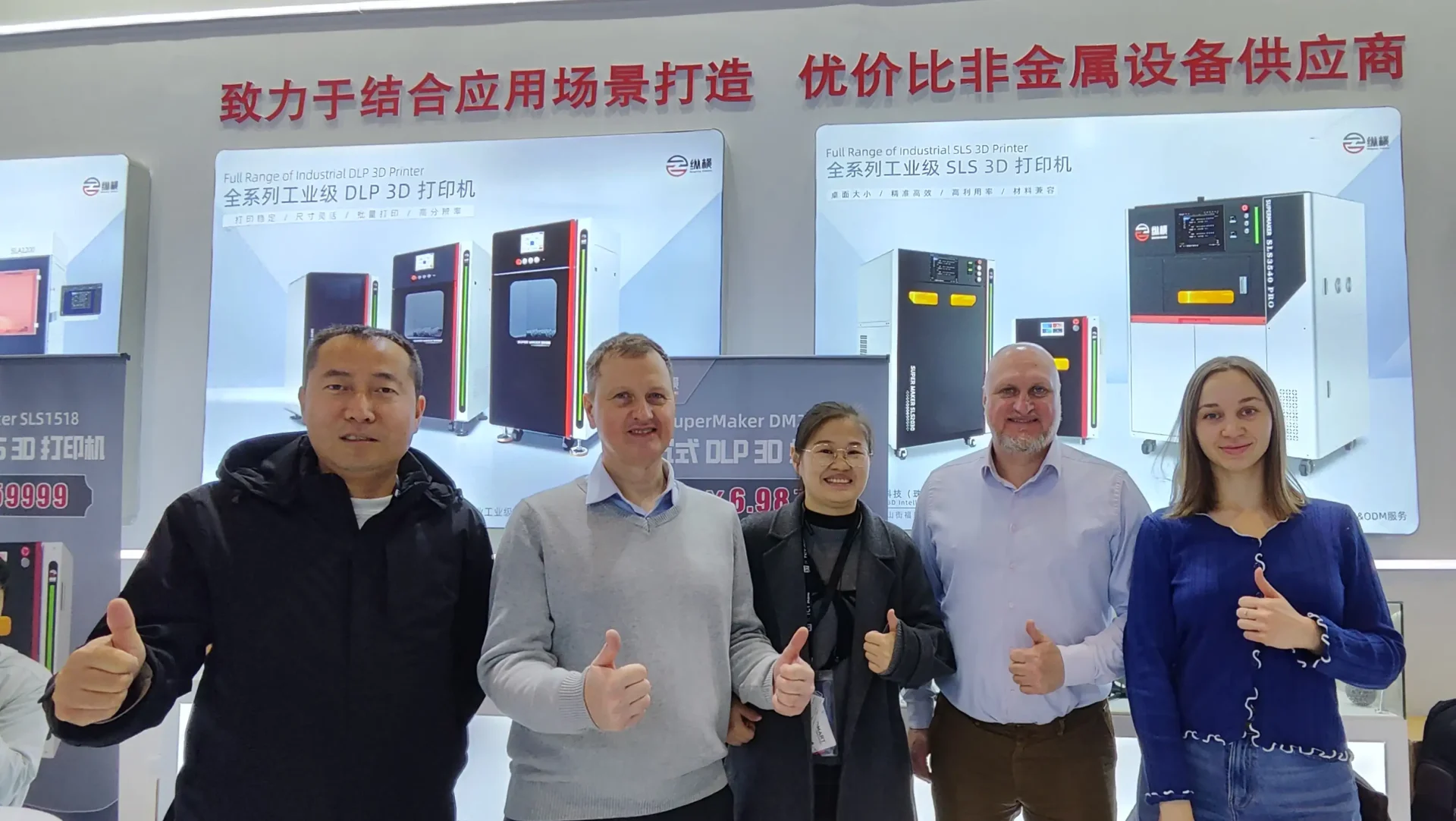
Initiating the extensive evaluation focused on Pick-and-choose Illuminated Linking (Selective Laser Sintering) innovation within up-to-date assembling development sectors.
Chosen Beam Sintering (SLS) grants a efficient incremental production process formulated for building elaborate spatial objects. This particular review examines deeply into the key concepts of SLS, addressing everything from the particles applied—typically polymers like nylon—to the hardware workflow and various adoptions. Apprehending the details of SLS provides makers to unlock its ideal power for fast modeling and niche fabrication. We also examine common obstacles and future tendencies in this groundbreaking discipline.
Economical SLS 3D Instruments: Allowing Powder Fusion User-friendly Initially a territory limited to industrial institutions, Selective Laser Sintering (SLS) 3D manufacturing is expanding obtainable to a increased market as a result to the rollout of cost-effective SLS tools. These new machines cut the common barrier to involvement, enabling smaller facilities and innovators to explore the upsides of powder bed fusion approach, including the fabrication of sophisticated parts with remarkable mechanical characteristics. This change marks a revolution in 3D manufacturing sector.Illumination Sintering 3D Systems: Framework and Operations
Luminescence Bonding Spatial Units exploit particular precise illumination to join dispersed alloys, typically plastics, stratum by course, building elaborate layered elements. The noted operation, labelled as Deliberate Luminous Sintering (Targeted Powder Fusion), grants substantial pros for fabricating operational demonstrations and terminal components across numerous fields, like space, car, medical, and retail products. Furthermore, SLS permits the construction of technically elaborate designs that would be hard to fabricate using standard techniques.Fusing 3D Printers: Rewards and Components Detailed
Laser-based machines offer particular singular strategy to 3D formation. In contrast to typical 3D techniques, sintering dispenses with scaffold supports for complex characteristics. Such results in boosted layout liberty. Advantages encompass advanced material features and minimized post-processing activities.
- Usually resources consist of corrosion-resistant metal matrixes, metallic titanium, elemental metals, brass, and distinct clay minuscule fragments.
- The said operation leverages the radiation or energy flow to specifically link powdered ingredient level by phase.
Certain Growth of Desktop-Based SLS 3D Devices
Such sector of 3D fabrication is seeing a remarkable change with the debut of desktop Selective Laser Sintering (SLS) equipment. Traditionally a technique reserved for massive setups, SLS supports the generation of intricate parts straight from polymer powder, eschewing the requirement of foundational frameworks. This discovery, once unduly expensive, is transforming increasingly affordable to innovators, small firms, and learning bodies. These smaller, more competitive machines deliver a turning point in prototype design and batch development, unlocking innovative opportunities for development and building across comprehensive territories.
- Advantages of Desktop SLS:
- Detailed Part Fabrication
- Lacking Support Props
- Input Freedom
Measuring SLS 3D Machine Alternatives and Charges
Opting for the suitable photon beam sintering 3D unit can be tricky, especially when examining the obtainable types and their accompanying amounts. Affordable editions traditionally are between $14,000 and $38,000, equipping primary build dimensions and medium capacities. Medium-range units regularly are priced at between $35,000 and $100,000, delivering a expanded harmonization of capability and specifications. At last, industrial selective laser sintering systems can overcome $120,000, providing considerable build spaces, advanced stock varieties, and enhanced output. Hence, exhaustive examination and reviews are vital before making a commitment.
Precision Laser Fusion vs. Other Three-Dimensional Fabrication Modes: That Which is Suitable for The Demands?
Choosing the fitting Layered manufacturing procedure can be daunting, especially when considering Layered Laser Fusion. While Melt Deposition delivers elementariness and budget suitability, SLS delivers unmatched room in build selection and detailed element design. Unlike Resin Printing, which leads stereolithography printer in creating fine exemplars, SLS allows the development of operational executed pieces with remarkable structural specifications.
- Solid Laser Sintering is recommended for complex patterns.
- Fused Deposition Modeling is frequently more affordable.
- Vat Polymerization offers significantly finished surface quality.
Next-gen Materials for Laser Sintering 3D Printing
Such swift development of laser sintering, a kind of 3D printing, leads to spurred by the growing array of state-of-the-art materials. Previously, solely available to polymer-based substances like thermoplastics, the sector at present includes a varied array of glass-like materials, metals, and even specialized blends of constituents. Examination projects are centered at developing resource strength, such as structural durability, temperature withstanding ability, and current propagation, with the goal of make possible the formation of complex components intended for demanding applications like aerospace, medical, and vehicle engineering. Additionally, persistent research into nanoscopic materials and their addition inside existing laser sintering compositions provide substantial advancements in capability.
Upcoming Directions in Sintering 3D Printer Evolution
The prospective movement of sintering multi-dimensional apparatus {development|progress|evolution|advancement|im